Baking school
Sponge
Tall, airy and fat-free: a sponge for gateaux and Swiss rolls gets its volume only from whisked eggs. Here is how to keep the air in.
A classic sponge needs no baking powder: the air you whisk into the eggs raises the cake. Everything after that is about not losing that air again.
How it works
Prepare: Preheat the oven to 175 °C (350 °F) conventional heat. Line only the base of the springform tin with baking paper and do not grease the sides – the batter "climbs" up them.
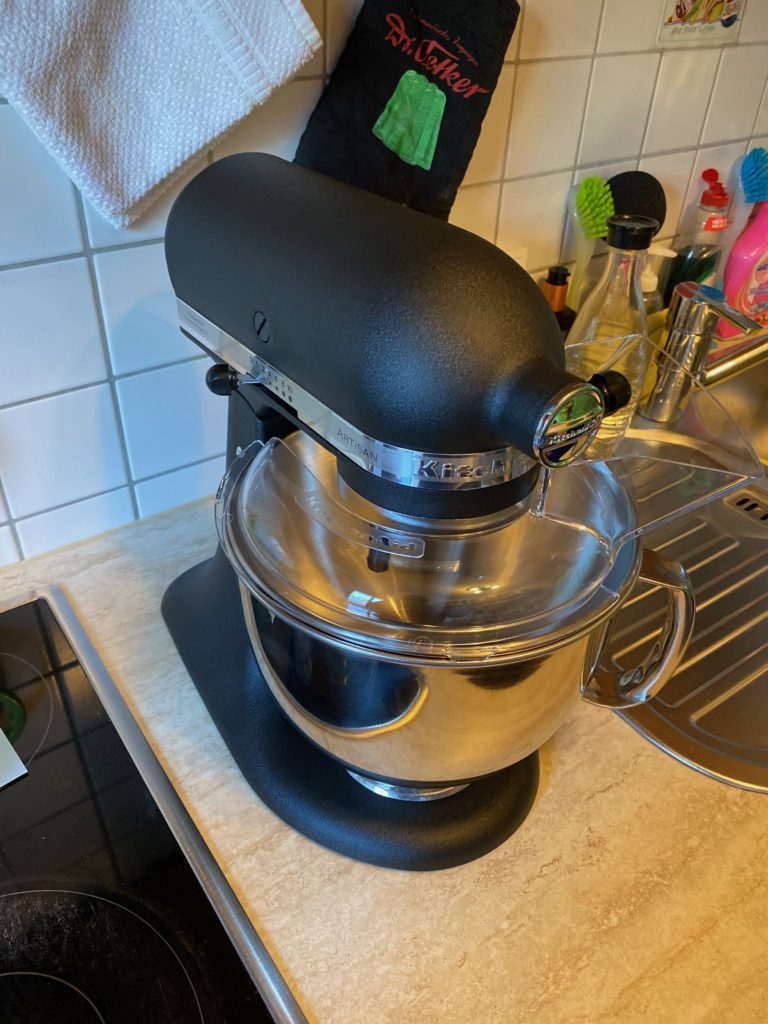
Whisk: Whisk room-temperature eggs with the sugar on the highest speed for 8–10 minutes until pale, thick and at least doubled in volume. It is right when it falls from the whisk in a ribbon that stays visible for a moment.
Fold in the flour: Sift the flour (ideally with some cornflour) over in two or three portions and gently fold in with a spatula – do not stir.
Bake straight away: Smooth the top and put it in the oven immediately. A cake base takes about 25–30 minutes.
Doneness test: The top springs back when pressed lightly and a skewer comes out clean.
Common mistakes
Sponge collapses: Oven door opened in the first 15–20 minutes, eggs not whisked long enough, or flour stirred in instead of folded.
Dense, wet layer at the bottom: Flour not folded in evenly, or the batter stood too long before baking.
Strong dome: Oven too hot – bake a little lower and longer.
Tips
Bake the sponge the day before: cooled and covered, it slices much more cleanly the next day.
For a Swiss roll, bake thinly on a tray (about 10 minutes at 200 °C / 390 °F) and roll it up while still warm.